
The Evolution of the Automobile: A Journey Through Innovation
The automobile has been one of the most transformative inventions in human history. From its humble beginnings to the modern-day marvels of engineering, the automobile has revolutionized how we live, work, and interact with the world around us. The journey of the automobile is one of constant innovation, reflecting society’s desire for speed, efficiency, and convenience. As we move further into the 21st century, the auto industry continues to evolve with advancements in electric vehicles, autonomous driving technology, and sustainable practices.
1. The Birth of the Automobile
The automobile, as we know it today, traces its origins to the late 19th century. While many inventors contributed to the development of motorized vehicles, the breakthrough is often credited to Karl Benz, who patented the first gasoline-powered car in 1886. His invention, the Benz Patent-Motorwagen, was a three-wheeled vehicle powered by a single-cylinder engine and is considered the world’s first true automobile.
Following Benz’s invention, the automobile industry began to grow rapidly. In the early 20th century, mass production techniques were introduced by Henry Ford, who is widely regarded as a pioneer in the automotive industry. Ford’s Model T, produced from 1908 to 1927, made cars more affordable and accessible to the average person, forever changing transportation and society.
2. The Rise of Automobile Culture
As automobiles became more affordable, they began to shape culture and society in profound ways. The automobile gave people the freedom to travel long distances quickly and comfortably, enabling the rise of suburban living and creating new economic opportunities. Roads and highways expanded, connecting cities and towns, while the automobile industry itself became a key driver of economic growth.
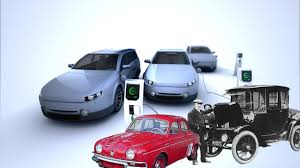
In the mid-20th century, the automobile industry also became a symbol of status and personal identity. Brands like Chevrolet, Ford, and Chrysler developed iconic vehicles that resonated with the public, sparking a sense of pride in ownership. The automobile was no longer just a means of transportation; it became an extension of one’s personality, aspirations, and lifestyle.
3. Technological Advancements in Modern Automobiles
As technology has advanced, so too has the automobile. Today’s cars are far more sophisticated than their early predecessors, equipped with features that improve safety, comfort, and performance. Modern vehicles are packed with innovations such as advanced driver assistance systems (ADAS), infotainment systems, and fuel-efficient engines.
One of the most significant recent advancements in automotive technology is the rise of electric vehicles (EVs). With growing concerns about climate change and the environmental impact of fossil fuels, electric cars have emerged as a cleaner alternative to traditional gasoline-powered vehicles. Companies like Tesla, Nissan, and Chevrolet have made electric cars more mainstream, offering a range of models that compete with traditional combustion engine vehicles.
Electric vehicles have the potential to reduce carbon emissions, improve air quality, and decrease dependence on non-renewable energy sources. As battery technology continues to improve, EVs are becoming more affordable, with longer ranges and faster charging capabilities, further fueling their adoption.
4. The Future of the Automobile: Autonomous and Sustainable Driving
Looking to the future, the automobile industry is poised for even more dramatic changes. One of the most exciting areas of development is autonomous vehicles, or self-driving cars. Advances in artificial intelligence, machine learning, and sensor technology are making it possible for cars to drive themselves, eliminating the need for human drivers. While fully autonomous vehicles are still in the testing phase, companies like Waymo, Tesla, and Uber are actively working on making self-driving cars a reality.
In addition to autonomous technology, there is a growing focus on sustainability within the automobile industry. Companies are exploring alternative fuels, such as hydrogen and biofuels, to reduce the environmental impact of transportation. There is also an emphasis on the development of car-sharing platforms, which could reduce the number of vehicles on the road and decrease traffic congestion and pollution.
Conclusion
The automobile has come a long way since its invention over a century ago. From the early days of the Benz Patent-Motorwagen to the modern electric and autonomous vehicles of today, the auto industry has continually evolved to meet the changing needs of society. As we look to the future, the automobile will likely continue to play a central role in our lives, with innovations in sustainability and autonomy shaping the way we drive and interact with our environment. The evolution of the automobile is a testament to human ingenuity and the desire to create a more connected and efficient world.