
Diffusion Models Handle Hallucination Detection
Diffusion models have emerged as a powerful approach for generating high-quality images, text, and other types of synthetic content. Unlike traditional generative models, diffusion models work by gradually refining noisy data to produce a coherent final output. However, like all AI-based generative methods, they are prone to hallucinations—instances where the model generates incorrect, unrealistic, or misleading information. To improve reliability, diffusion models incorporate various techniques for detecting and mitigating hallucinations, ensuring their outputs align more closely with reality.
One key way diffusion models handle hallucination detection is through iterative refinement. Unlike models that generate an image or text in a single step, diffusion models progressively transform noise into structured content. During this step-by-step process, inconsistencies and unnatural elements can be identified and corrected before reaching the final stage. This iterative nature allows developers to analyze intermediate outputs, spot emerging hallucinations, and adjust the model to prevent errors from propagating. By monitoring the transformation process, researchers can implement strategies that reduce hallucination rates over multiple iterations.
Another method used in hallucination detection is consistency checking across different diffusion runs. Because diffusion models generate content based on probabilistic sampling, running the same prompt multiple times can yield different outputs. If a model consistently generates reliable content across multiple runs, it indicates stability. However, if significant variations, distortions, or fabricated details appear in repeated generations, it suggests a higher likelihood of hallucinations. By comparing multiple outputs for the same prompt, developers can identify unreliable patterns and fine-tune the model to improve accuracy.
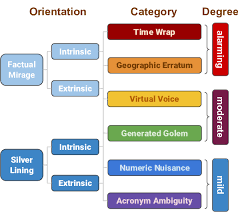
How Do Diffusion Models Handle Hallucination Detection?
Diffusion models also handle Al hallucination detection and accuracy improvement by leveraging guidance mechanisms such as classifier-based or classifier-free guidance. These techniques allow the model to incorporate external constraints to steer outputs toward realism. For example, in text-to-image generation, a classifier can help verify whether an image accurately represents the given text prompt, reducing the chances of hallucinated features. Classifier-free guidance, on the other hand, relies on training the model with conditional inputs that guide it toward more accurate generations. These guidance techniques help filter out unrealistic details and ensure outputs remain aligned with expected patterns.
Another effective approach in hallucination detection is integrating human feedback and real-world constraints. Many diffusion models are trained with reinforcement learning from human feedback (RLHF), where human evaluators assess outputs and provide corrective signals to the model. This process helps the AI learn which elements appear unnatural or misleading, gradually reducing hallucinations over multiple training cycles. Additionally, incorporating real-world physics and domain-specific constraints can prevent the model from generating physically impossible or logically inconsistent outputs, further enhancing reliability.
Despite these advancements, diffusion models are not completely immune to hallucinations. Researchers continue to explore ways to refine training data, improve model architecture, and develop better validation techniques. As diffusion models become more widely used in creative applications, medical imaging, and scientific simulations, reducing hallucinations remains a priority. The ability to detect and mitigate hallucinations ensures that AI-generated content remains trustworthy and useful, making diffusion models a more reliable tool for various real-world applications.
