
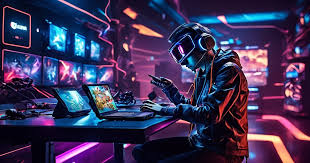
Gaming: The Evolution, Impact, and Future of the Gaming Industry
Gaming has evolved from a niche hobby to a global phenomenon that spans various platforms, genres, and demographics. What once started with simple arcade games and home consoles has transformed into a multi-billion-dollar industry, with gaming shaping entertainment, culture, and even social interaction. Today, millions of people of all ages engage in gaming, whether through PCs, consoles, mobile devices, or virtual reality. The gaming world has become a powerful force in the entertainment sector, and its impact continues to grow.
The Evolution of Gaming
The roots of modern gaming can be traced back to the 1950s and 1960s when computer scientists developed the first rudimentary video games. One of the earliest examples is Spacewar! (1962), created by Steve Russell and others at MIT. The 1970s saw the rise of arcade gaming, with games like Pong (1972) becoming household names. This era marked the beginning of the gaming culture, with arcades becoming gathering places for gamers.
The 1980s ushered in the era of home consoles, most notably the Nintendo Entertainment System (NES), which revolutionized gaming by bringing it into people’s living rooms. By the 1990s, gaming had entered the world of 3D graphics with the release of consoles like the Sony PlayStation and Sega Saturn. The transition to 3D environments, along with improvements in hardware and software, allowed for more complex and engaging games.
As the internet became widely accessible in the 2000s, online gaming took off. Multiplayer games, such as World of Warcraft, Counter-Strike, and Fortnite, allowed players to connect and compete across the globe. This shift not only changed how people played but also led to the rise of esports, where professional gamers compete for prizes and recognition in massive tournaments.
The Impact of Gaming
Gaming has significantly impacted several aspects of society, including entertainment, education, and social dynamics. It has become a form of entertainment on par with movies, television, and music, offering immersive experiences that captivate players for hours. The gaming community has grown into a vibrant ecosystem with content creators, streamers, and influencers shaping the industry’s direction.

One of the most notable impacts of gaming is its ability to foster social connections. Online multiplayer games, such as League of Legends or Among Us, enable people from different parts of the world to communicate, cooperate, or compete in real time. Gaming has become a social activity for many, where friendships are formed, and communities are built around shared interests. Virtual worlds and platforms like Twitch and Discord have further enhanced this sense of connection, creating spaces for gamers to share experiences and build relationships.
Gaming also has educational value. Educational games and simulations are increasingly used in schools and universities to engage students and teach complex concepts in interactive ways. Games like Minecraft have been used to teach subjects such as mathematics, history, and engineering, demonstrating that gaming can be both fun and educational.
The Future of Gaming
The future of gaming is exciting, with emerging technologies poised to change the industry even further. Virtual Reality (VR) and Augmented Reality (AR) are creating new possibilities for immersion. Games like Half-Life: Alyx showcase the potential of VR to create truly interactive environments where players can physically engage with the game world. AR, exemplified by games like Pokémon GO, blends the real world with digital elements, offering a unique gaming experience.
Cloud gaming is another game-changing development. Services like Google Stadia, Xbox Cloud Gaming, and Nvidia GeForce Now allow players to stream games without the need for expensive hardware. This opens up gaming to a wider audience, as users can play high-quality games on devices that wouldn’t traditionally be capable of running them.
The rise of artificial intelligence (AI) and machine learning will also impact game design and player experience. AI can be used to create more sophisticated non-player characters (NPCs) and dynamic game worlds that evolve based on player actions, leading to more personalized and immersive gameplay.